Clipboards, Cables and Calm: The Carnival Voice You Rarely See

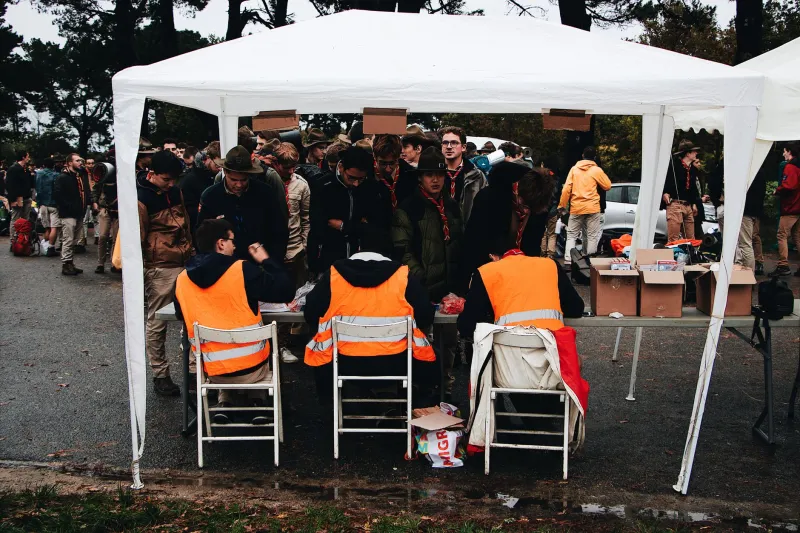
The tannoy tent is rarely the prettiest spot on the carnival field. It is usually a gazebo with one side open to the breeze, a folding table weighed down with clipboards, and a nest of cables that looks like it has been donated by a very generous spider. But stand beside it for ten minutes and you realise something: this is where the day is held together.
The tent with the best view and the worst acoustics
From the announcer’s chair, the carnival arrives in slices. A scout troop in matching neckers files past the bunting. The ice cream van reverses into position with a warning beep. Somewhere near the tombola, a steward is waving a high-vis arm at a lost buggy. The voice behind the microphone sees all of it — or, at least, sees enough to keep things moving.
And that is the trick. A carnival day is not one big event. It is dozens of small ones, all running slightly late. The procession needs a nudge. The dog show needs a five-minute warning. The dance troupe needs to know the main stage is running behind because the sound check has developed opinions. The tannoy announcer is the person who turns that muddle into something that sounds, to everyone else, like a plan.
More than a warm-up act
It is easy to treat the voice on the tannoy as background noise — a friendly bit of filler between the brass band and the raffle. But listen closely and you will hear a proper craft. A good announcer does not just read out times and names. They set the pace. They make a scattered crowd look up. They turn a gap in the programme into a moment rather than an awkward pause.
There is a particular skill in filling three minutes without sounding like you are filling three minutes. The best carnival voices can do it with a bit of local knowledge, a gentle plug for the cake stall, and a reminder that the loos are behind the marquee and not, as several people have already decided, inside it. They keep the tone light but never syrupy. They sound pleased to be there without sounding like they are auditioning for a radio breakfast show.
The lost-parent hotline
Ask any carnival organiser what the tannoy is really for and they will not say entertainment. They will say safety, information and reuniting families. The lost-child announcement is the tannoy’s most serious job, and the one that needs the calmest delivery. No panic, no drama, just a clear message: a small person in a red coat is waiting by the information point, and a grown-up is on their way.
That calm is contagious. When the voice stays steady, the crowd stays steady. When the voice sounds flustered, the whole field starts to feel like the queue for the chip van has become a breaking news story. A tannoy announcer is not just speaking to the people in front of the stage. They are speaking to the whole site at once, and everyone is listening more than they realise.
When the silence is the point
One of the least understood parts of the job is knowing when not to speak. Carnival days are full of noise — drums, generators, the PA, a toddler having a very public disagreement with a balloon. A good announcer leaves room for all of that. They do not talk over the procession as it passes. They do not compete with the main stage just to remind everyone that the tombola is still open. They pick their moments.
That restraint is why the role deserves more credit than it gets. Anyone can read a list of times into a microphone. It takes judgement to know that the best thing for the atmosphere is a short, warm link and then a bit of quiet. It takes even more judgement to know when a gentle joke will lift a soggy afternoon and when it will just add to the noise.
The kit, the clipboard and the backup plan
Behind every smooth announcement is a clipboard with more crossings-out than a school exercise book. The running order changes. Performers arrive early or late. The wind picks up. A battery dies. The microphone lead develops a mind of its own. The announcer’s job is to absorb all of that and still sound like everything is fine.
At BTP Carnival, we have seen enough of these tents to know that the real kit is not just the amp and the spare batteries. It is the weatherproof folder, the laminated map, the phone numbers for the stewards, and the quiet understanding between the announcer and the people running the field. It is a team effort with one voice out front.
Give the voice a wave
So next time you hear the carnival tannoy crackle into life, listen for a second longer than usual. Behind that friendly voice is someone who has been on their feet since breakfast, who knows where the first-aid tent is without looking, and who has probably already reunited at least one parent with a child before lunch. They are not the headline act. They are the thread that runs through the whole day.
And if you spot them in the tent, clipboard in one hand and a cup of tea going cold in the other, give them a wave. They have earned it.