The Scorecard Says What? Inside the Carnival Judges’ Tent

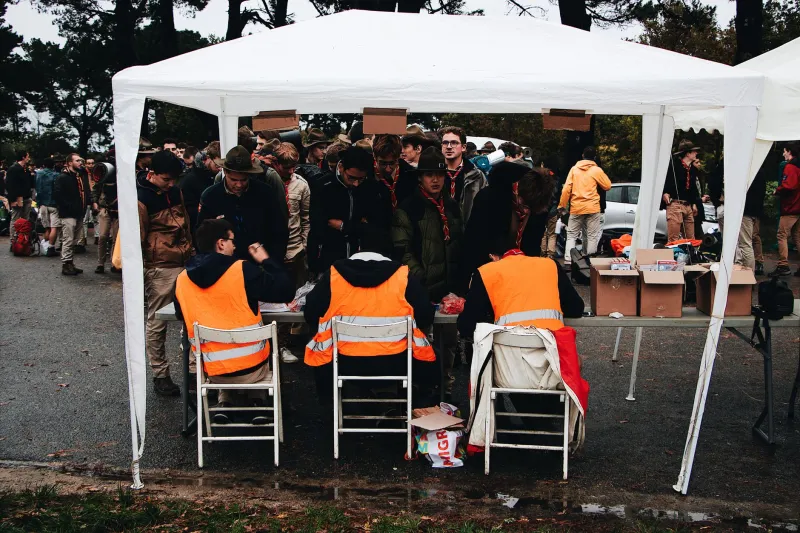
The judges’ tent at BTP Carnival does not look like a seat of power. It is a gazebo with a slightly stubborn zip, a folding table, a flask that has seen better mornings and a stack of scorecards weighed down by a bag of emergency biscuits. Yet for a few hours each carnival day, this is where floats, costumes and procession groups are turned into numbers, comments and the occasional respectful argument about whether a dragon made from willow deserves an extra mark for ambition.
Judging a community carnival is not quite like judging a dog show or a baking contest. There is no single perfect Victoria sponge to compare everything against. Instead, the judges are trying to rank creativity, effort, teamwork, safety and sheer carnival spirit without flattening the thing that makes a local parade brilliant in the first place: the fact that everyone is doing it slightly differently.
The Clipboard Is Not the Enemy
Most carnival judges are volunteers. Some have a background in performance, costume, community events or craft. Others are simply long-standing carnival people who have seen enough processions to know when a float has been thrown together on Friday night and when it has been quietly evolving in a shed since February. They are not there to catch people out. They are there because someone has to make a decision, and because the clipboard does not fill itself in.
The criteria are usually less mysterious than entrants fear. Judges tend to look at theme and storytelling, visual impact, craftsmanship, use of colour, participant involvement, performance or movement, and practical safety. Some carnivals also give weight to sustainability, inclusivity or community engagement. The exact mix varies, but the broad shape is rarely a secret. It is in the entry pack, even if the entry pack is the document everyone skimmed while eating toast.
That is the first practical tip, then: read the pack properly. If the judges are asked to reward costumes made from recycled materials, a float covered in brand-new plastic sheeting may still look splendid but it will not tell the same story on the scorecard. If the theme is ‘Seaside Stories’, a brilliant pirate ship is lovely, but a pirate ship with a visible narrative — a crew, a soundscape, a few seagulls on sticks — is easier to score.
What They Notice First
From the judges’ table, the procession arrives in a rush. There is noise, colour, movement and someone in the background asking whether the generator has enough fuel. Judges are not robots with spreadsheets for eyes, so the first impressions matter. A strong silhouette helps. So does a clear front. If the audience cannot tell where the float begins and the theme ends, the judges will probably be squinting too.
Height and movement draw the eye, but so does confidence. A small group in excellent costumes, walking in step and engaging with the crowd, can score more highly than a huge float where everyone is hidden behind a wall of tissue paper. The judges are looking for the whole entry, not just the vehicle. Are the people part of the design? Is there something to watch? Does the thing feel alive?
Sound matters more than entrants often realise. A drum, a repeated chant, a well-timed wave or a piece of music that fits the theme can lift an entry from pleasant to memorable. It does not need to be a West End production. It needs to be audible, appropriate and safe. A float where the music is so loud that the judges can only hear distortion is not doing itself any favours.
The Last-Minute Repair Test
Carnival day is a festival of last-minute repairs. A headdress collapses. A banner loses a corner. A wheel develops opinions. The judges know this. They are not expecting museum-grade perfection from something that has been assembled in a church hall and towed behind a van.
What they do notice is how a problem is handled. A neat gaffer-tape patch, a cable tie doing sensible work and a team that has clearly thought about safety will read better than a trail of loose fabric and exposed fixings. If something has broken, fix it as tidily as you can and carry on. Judges tend to respect resourcefulness. They are less keen on entries where the repair is clearly a person holding a wobbly prop upright with their forehead.
Weather is part of this too. British carnival weather can go from drizzle to glare and back again before the first group has reached the corner. Entrants who have planned for rain — waterproof coverings, secure signage, costumes that do not dissolve — will not only be more comfortable but also easier to judge. A soggy sash is not a crime. A float that cannot move because the cardboard has turned to porridge is a problem.
The Quiet Marks
Some of the most important judging happens off the scorecard. Judges notice whether a group is looking after its younger members. They notice whether people are being left behind, whether the crowd is being included or ignored, and whether the entry leaves a trail of litter or a trail of smiles. These things do not always appear as a separate category, but they shape the overall impression.
This is why the clipboard can feel political without anyone being political. When two entries are close, the discussion turns to small things: who kept the energy going in the rain, who made the children in the crowd laugh, whose costumes held together, whose theme could be understood from fifty yards away. The judge with the strongest opinion will usually make a case. The judge with the flask will usually suggest a biscuit. A decision gets made.
How to Make the Scorecard Easier
For anyone entering BTP Carnival in 2026, the best approach is not to guess what the judges want but to make your entry easy to understand. Rehearse your route and your stopping points. Brief everyone on the theme. Label your kit boxes. Have a weather plan. Keep music and generators safe and sensible. Make sure the front of the float says something, even if it is just a bold title and a clear visual gag.
And do not save the whole performance for the main stage. Judges often watch the entry as it approaches, passes and moves on. A group that is lively for the whole stretch will score better than one that switches on for thirty seconds and then spends the rest of the route adjusting a shoulder strap.
Ranking Joy Is Not a Science
The truth is that no scorecard can properly measure the feeling of a carnival. A float can be technically excellent and still leave the crowd cold. Another can be held together with string, hope and a borrowed wheel and still make the whole street grin. Judges try to balance both. They compare notes, revisit the criteria, and occasionally admit that ranking community joy is an impossible job.
So if you see a volunteer with a clipboard in the judges’ tent, do not assume they are looking for reasons to mark you down. They are probably hoping you will give them something clear, joyful and safe to mark up. And if your banner is held on with a cable tie and a prayer, at least make sure the prayer is waterproof.