Fifty Years, One Folding Table: The Quiet Cornerstone of Carnival
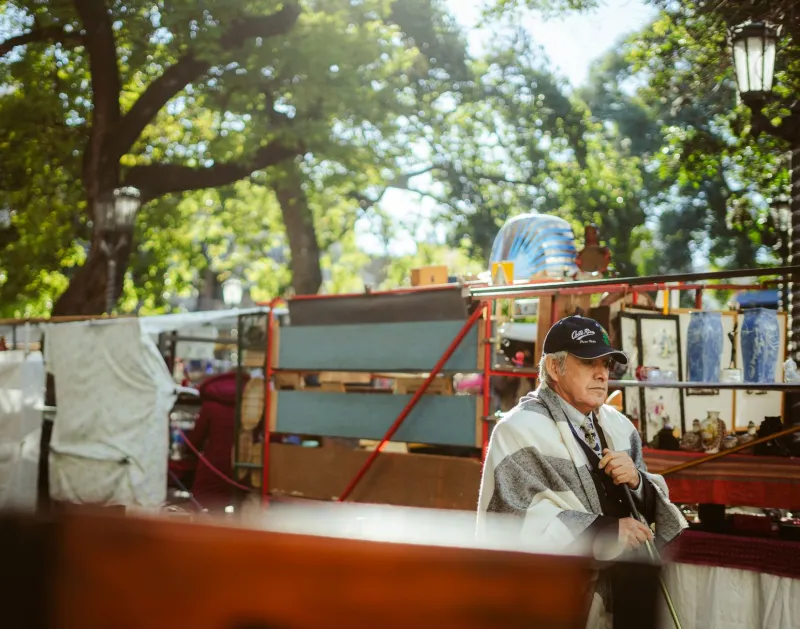
On carnival Saturday, Ronnie Hargreaves arrives before the bunting is straight. By 7:40am he is unloading a folding table from the back of a tired estate car, muttering about the weather and checking that the coconut balls are still in the same biscuit tin they have lived in since the 1990s. Ronnie is 78. He has run the same charity stall at Caldermoor Carnival for fifty years. Not a variation on it, not a rebranded version with a QR code and a laminated mission statement, but the same coconut shy and cake table that his late wife, June, talked him into taking on in 1976.
“I thought I’d do one year,” he says, wrestling a gazebo leg into place. “Then somebody asked me to do the cakes the next year because the vicar’s wife had broken her wrist. That was that.”
This year’s carnival falls in 2026, and Ronnie is already planning. He has a new card reader for donations, a fresh allergen sheet, and a quiet worry that the coconut shy might need a second table because the queue gets tangled with the tombola. But the core of the stall is unchanged: a homemade sign, a charity tin, a tray of Victoria sponge, and a row of coconuts waiting to be knocked off their stands by anyone willing to part with 50p.
The same table, a different world
Fifty years is a long time in carnival terms. When Ronnie started, the stall was lit by a borrowed camping lantern and the prize for a winning coconut was a bag of penny sweets. The cakes were cut on a pasting table with a knife from his kitchen drawer. Donations went into a coffee tin with a slot hammered into the lid.
Now there is public liability insurance, risk assessments, and a folder of paperwork that Ronnie keeps in a plastic wallet. The cakes carry labels for gluten, dairy and nuts. The coconut shy has been measured, checked and deemed safe by someone with a clipboard. Donations can be made by card, though Ronnie still prefers cash because “you can hear it land.”
The prizes have changed too. Gone are the goldfish bowls and the slightly sad-looking lucky dip bags. In their place are fidget toys, mini colouring sets and the kind of small plastic dinosaurs that seem to multiply in school bags. The coconut shy itself has survived, partly because Ronnie refuses to let it go, and partly because children still enjoy the simple, satisfying clonk of a ball hitting wood.
What has really shifted is the crowd. Carnival Saturday in 2026 is busier, noisier and more photographed. People arrive with phones held high, filming the parade and the dancers. They tap contactless cards and check opening times on social media. But the families still stop at the cake table. They still ask if the sponge has jam in the middle. They still let their children have one go on the coconuts, then another, then a third because the first two missed.
What hasn’t moved
Ronnie’s routine has barely changed. He sets up the table first, then the coconuts, then the cakes. He keeps the change float in a Quality Street tin. He has a pen tied to the donation box with string, and a spare pen in his pocket in case the string breaks. He still writes the prices on a piece of card with a marker pen, because “people like to see a human hand.”
The stall is not the loudest thing at carnival. It is not the main stage, the funfair or the parade. It is a small charity pitch tucked between the bric-a-brac and the plant stall, easy to miss if you are heading straight for the doughnuts. But it is one of the places where the carnival actually happens: where neighbours stop to chat, where grandparents sit on folding chairs, where children learn that a 50p coin buys a turn and a turn might buy a coconut.
“I’ve had people come up and say they won a coconut here when they were six,” Ronnie says. “Then they bring their own kids. Last year a woman showed me a photo of herself at the stall in 1989. She had the same haircut as her daughter. I remembered her mum’s cake.”
Why the small stalls still matter
Carnival organisers often talk about footfall, attractions and headline acts. Those things matter, of course. They bring people through the gates. But the small charity stalls are the reason many families stay. They offer something to do that costs very little, something to win, something to eat, and a chance to natter with someone you might not otherwise meet.
For Ronnie, the stall is also a memorial. June died in 2014, and her name is still on the cake table sign, slightly faded now. The Victoria sponge is made to her recipe, though Ronnie admits he sometimes adds too much jam. He keeps a notebook with a line for every carnival: the weather, the money raised, the prizes that went down well, the helpers who turned up. The 2020 entry simply says “cancelled.” The 2021 entry says “smaller, but we did it.”
This year, he is training two younger volunteers from the village hall committee. They have shown him how to use the card reader and how to make a QR code for the charity page. He has shown them how to stack cakes so they do not slide in the heat, and why the coconut balls should be kept in the shade. It is a fair exchange.
The fifty-year coconut
Ronnie is not planning to retire just yet. He says he will keep going as long as he can carry the folding table, and perhaps a bit longer if someone else carries it for him. He is already thinking about next year, and the year after that. The carnival will change again. The music will get louder, the paperwork longer, the prizes stranger. But the table will be there, and so will he, with a tin of coconut balls and a cake knife in his pocket.
“It’s not a big thing,” he says, looking at the empty field before the crowds arrive. “It’s just a stall. But people remember it. And if they remember it, they come back.”